


Showing posts with label 2010. Show all posts
Showing posts with label 2010. Show all posts
Thursday, April 21, 2011
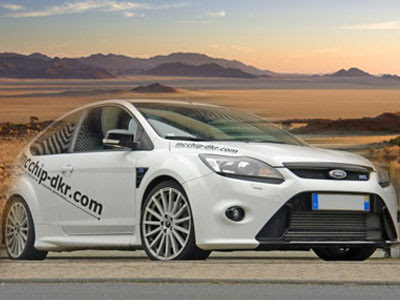
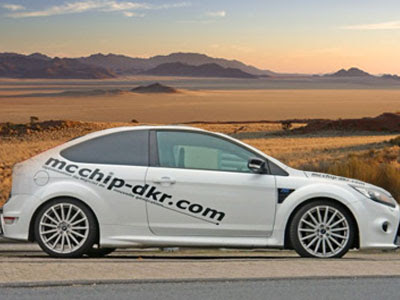
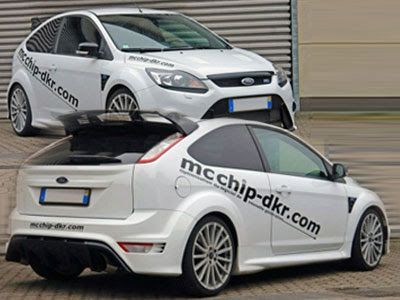
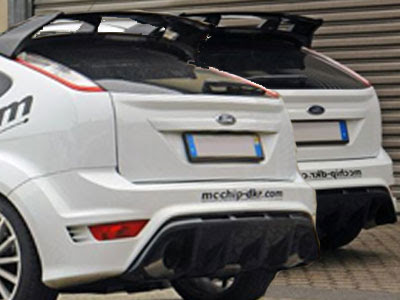
2010 Ford Focus RS Mcchip-dkr Sports Car offers two power at once

2010 New Bentley Mulsanne Luxurious Sports Car The 8-litre’s Debut at Pebble Beach Concours D’Elegance, California
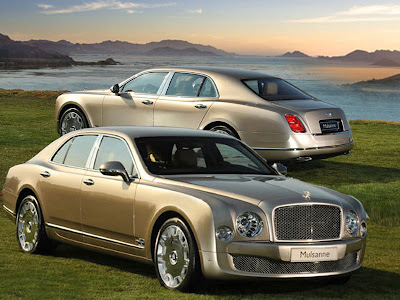
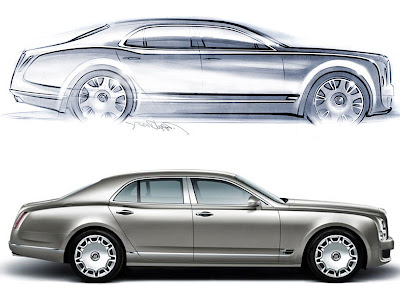
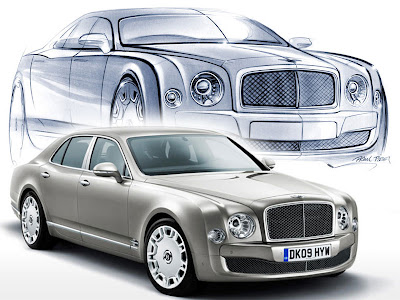
The return of the Mulsanne name to a car carrying Bentley’s iconic ‘Winged B’ emblem underlines the company’s racing pedigree and nowhere reflects that heritage better than the famed Le Mans circuit, the scene of no fewer than six Bentley triumphs. Few places offer a stronger or more emotive connection with the Bentley marque than the famed Mulsanne corner.
The Bentley 8-litre displayed alongside the Mulsanne in California was first shown at the 1930 London Motor Show.
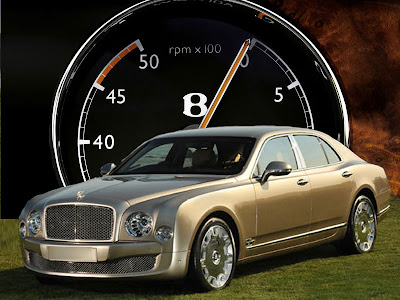
It was the second-built and was W.O. Bentley’s company car for two years. Capable of reaching more than 100 mph, the 8-litre demonstrated W.O. Bentley’s ambition and ability to build a grand luxury car capable of surpassing every other leading manufacturer of the day. A total of 100 cars were built in 1930 and 1931.
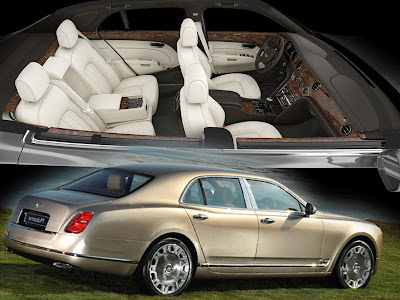
“The 8-litre’s breathtaking performance and quality was perhaps the finest example of a ‘pure’ grand Bentley. Every mechanical detail carried W.O. Bentley’s unique stamp and it was the clearest demonstration of a car built without compromise,” commented Dr. Ulrich Eichhorn, Member of the Board Engineering. “The Mulsanne has been designed with exactly the same guiding principles, so it is entirely fitting that these Bentleys from different eras share the same stage.”
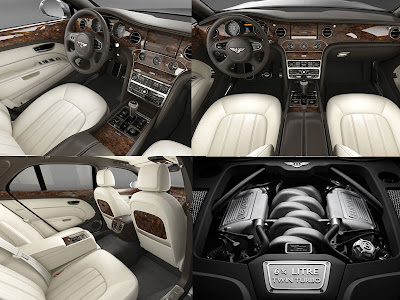
The Bentley Mulsanne will go on sale from mid 2010. It will also be displayed at the forthcoming IAA Frankfurt Motor Show (15-27th September, 2009) where Bentley Motors will provide additional product information.
2010 Hyundai Genesis Sports Car Coupe with SHIFTRONIC to handle the additional torque
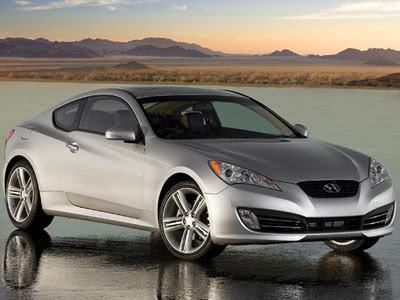
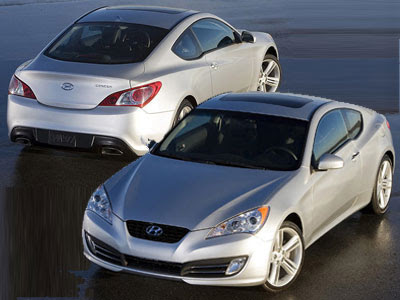
The Genesis Coupe follows the styling tradition set forth by the Hyundai Tiburon, but outdoes that aging Hyundai compact sports car in every way. The Genesis Coupe comes with an available naturally aspirated V6, sure to be a motor to find its way into more of Hyundai's lineup. The high output engine offers 310 horses on premium fuel. Following the introduction earlier this year of the rear-wheel drive Genesis sport sedan, Hyundai Genesis Coupe is Hyundai's most dynamic performance car ever and the second consecutive all-new model introduction from Hyundai appealing directly to the car enthusiast.
Hyundai Genesis Coupe uses the same flexible rear-wheel drive architecture originally developed for the Genesis sport sedan.
The 2010 Hyundai Genesis Coupe offers Xenon high-intensity discharge (HID) headlights. The advantages of HID headlamps include greater lighting power, daylight-type lighting and reduced power consumption. In addition, the cut lines of the new HID headlights are extremely precise, providing maximum nighttime visibility without distracting other drivers.
The Hyundai Genesis Coupe is offered in three trim levels: the stylish and affordable GS, the premium-sport GT featuring the 3.8-liter V6, and the high-performance SE, available with either the 2.0-liter turbocharged four-cylinder engine or the 3.8-liter V6 engine.
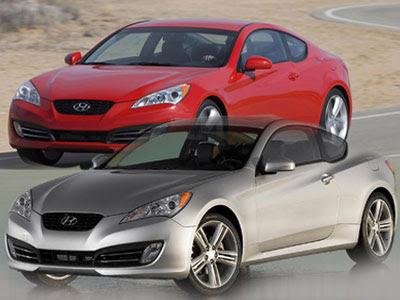
Hyundai Genesis Coupe uses the same flexible rear-wheel drive architecture originally developed for the Genesis sport sedan.
The 2010 Hyundai Genesis Coupe offers Xenon high-intensity discharge (HID) headlights. The advantages of HID headlamps include greater lighting power, daylight-type lighting and reduced power consumption. In addition, the cut lines of the new HID headlights are extremely precise, providing maximum nighttime visibility without distracting other drivers.
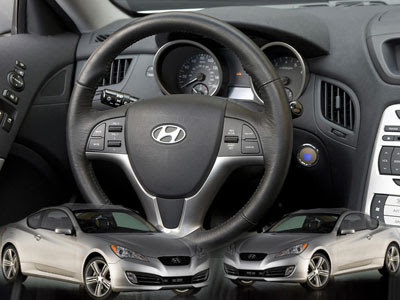

The Hyundai Genesis Coupe is offered in three trim levels: the stylish and affordable GS, the premium-sport GT featuring the 3.8-liter V6, and the high-performance SE, available with either the 2.0-liter turbocharged four-cylinder engine or the 3.8-liter V6 engine.
2010 Ford GT90 Super Sport Car Concept going to auction

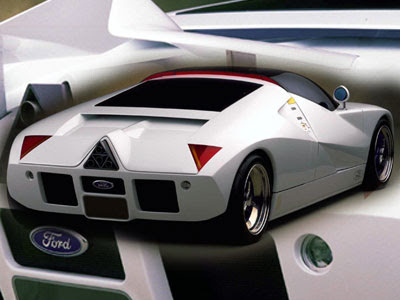
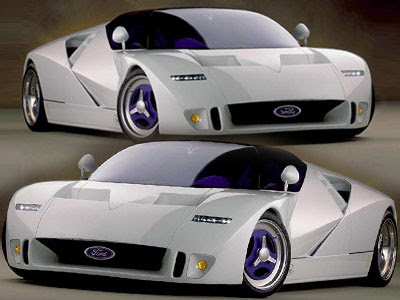
The one-off GT90 Concept Car, labeled immediately as "the world's mightiest supercar" by Ford Motor Company on December 6, 1994, was the spiritual successor to the Ford GT40, the product of a colossal feud in the early 1960s between the Blue Oval from Dearborn and the Prancing Horse of Northern Italy. The GT90 draws from the design cues of its heritage and pays homage to the famed Le Mans-winning Ford GT40s of the 1960s, which were created after the failed attempt by Ford to buy out Ferrari.
At a development cost in the neighborhood of $3 million, the GT90 was certainly worthy of pulling styling cues from the original Ford GTs, and although it was never meant for production, it was built according to a Ford press release as a "test bed for technology, engineering and design concepts, and driver-oriented features that eventually may be used in Ford production vehicles."
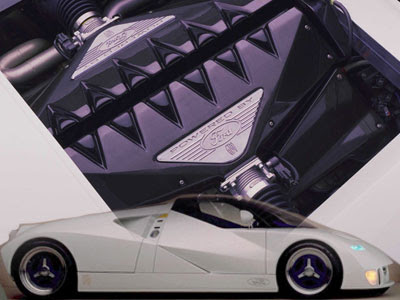
The engine, which was a 48-valve six-liter V12, had to be combined together with four Garrett Systems T2 turbochargers in order to reach its estimated 720 horsepower and was based on the Ford Modular engine. Created by using parts of two Lincoln V8 engines, engineers removed the last pair of cylinders from the rear of one engine and the first pair of cylinders from the front of the other engine. The cut-down engines were then welded together with the final result being a 90-degree V12, which utilized a 90.2 mm bore and a 77.3 mm stroke to achieve maximum power.
Using Ford's new "Edge" design philosophy, the car incorporated advanced technology with a mixture of flat planes, angles, glass and triangular shapes that seemingly all collided together. The GT90 was the first car created using this new styling directive from Ford, which went on to be responsible for the creation of other Ford products like the Ka and Cougar. The effect is most impressive and a wonderfully executed stylistic throwback to its GT40 predecessor, which at once stays true to its heritage but acknowledges the advances in modern design. Taken directly from race car technology, the GT90 body panels are molded out of carbon fiber while the chassis is formed out of a honey-comb sectioned aluminum monocoque.
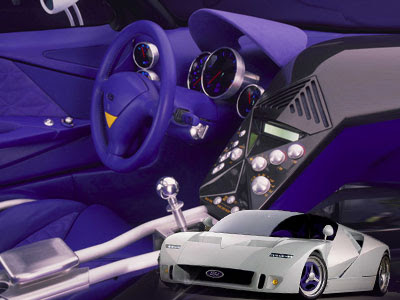
After its unveiling in Detroit, the GT90 made its rounds on the Auto Show Circuit in 1995, traveling around the world to Frankfurt and as far away as Tokyo. With few other showings in between, the car recently was shipped over to Europe to be on display in the Ford of Europe 2008 exhibit at the Goodwood Festival of Speed. After returning home, the car was shipped to Alabama where it was on display as part of the Mustang 45th Anniversary Celebration.
This superb concept car remains in excellent running condition, having been properly stored and maintained over the years in between its show appearances. RM Auctions is proud to publicly offer the GT90 for the first time ever at auction. A remarkable one-off piece of automotive history and cutting-edge design, its offering may very well be a once in a lifetime opportunity for Ford devotees and concept car enthusiasts.
2010 Ford Mustang Sports Car 4.6-liter V8 Engine
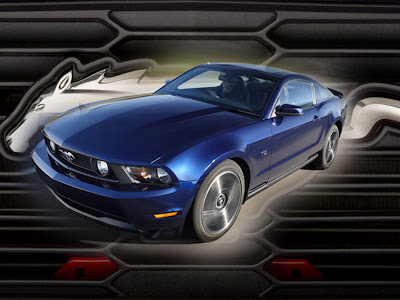
Combine those elements with the new Mustang's improved handling characteristics, more standard safety and technology features and its already-strong safety and quality performance and reputation, and it's easy to see how the muscle car known around the world delivers on the promise of fast, fun and affordable performance for a whole new era.
"The best Mustangs have always been the ones that connect young America with the spirit of the times - and the 2010 does exactly that," said J Mays, Ford's group vice president of Design. "The new Ford Mustang is close to the magnetic center of the original, fully loaded with the swagger you'd expect, but with modern refinement and attention to detail like you've never seen in a muscle car."
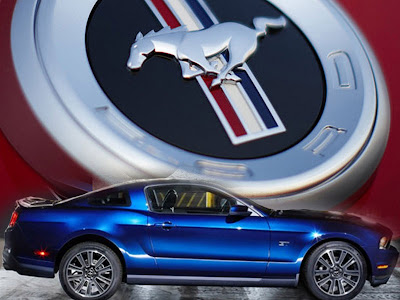
It starts with the more aggressive grille, punctuated with the first new Mustang emblem since the car's introduction in 1964. Both the V6 and GT have brand-new sculptured front-end designs unique to each model. The headlamps and turn indicators, now integrated into one unit, are modern interpretations inspired by the 1970 Ford Mustang. On the V6, the fog lamps are located on the lower fascia, while on the GT, the fog lamps are again located in the upper grille - but are smaller than the outgoing model, similar to the original lamps of the 1967-68 models that inspired them.
Cleverly combining modern technology with Ford Mustang heritage is a signature of the 2010 model, in terms of both design and engineering. The wheel-and-tire combinations are 1 inch bigger across the board, ranging from 17 to 19 inches, which helps improve handling and braking. The shocks have been retuned on all models as well. The 2010 Ford Mustang 4.6-liter V8 benefits from innovations from the popular Ford Mustang Bullitt model. Power has increased to 315 horsepower. "It runs on regular gasoline, but if you put in premium it has adaptive calibration that will give you even better mid-range torque," Barnes said, adding that Easy Fuel™, Ford's innovative capless fuel system, is standard on all models. "It's an upgrade to the most-robust, most-accessorized engine in the marketplace today," Randle added. "No one has the reliability, no one has the upgraded options. This is a fantastic engine, proven on the race track, the drag strip and on the highway."
AdvanceTrac™ Electronic Stability Control (ESC) is now standard and complements Mustang's all-speed traction control and anti-lock braking system (ABS). In addition to all of the design and driving dynamics improvements, the 2010 Ford Mustang is engineered to maintain its top government safety ratings. Standard safety equipment includes: dual stage front driver and passenger air bags; front seat-mounted side air bags; and, Ford's Personal Safety System.
The powerful new one-piece instrument panel design is crafted in seamless soft-touch TPO (Thermoplastic Olefin) skin fully encompassing available genuine aluminum-finish panels. Mustang's chromed-ringed gauges and dual-vane air register vents are precisely crafted and positioned.
With a completely redone exterior that echoes the classic Mustang designs of the past, an interior featuring world-class materials, numerous technology upgrades and an improved driving experience, the 2010 Ford Mustang is poised to become the latest classic in the proud line of Ford's iconic American muscle car.
From the V6 to the Shelby GT500, the goal was to make each model appear even more sculpted than its predecessor. The result is a lineup of iconic cars that maintain their identity in a contemporary way. Each classic design element - the grille shape, the "hockey stick,' the hop up into the rear haunch, the quarter-glass window, the three-bar tail lamp, the center-mounted gas cap - is modernized in a way that lends the new car even more presence and character. The aggressive look is enhanced by larger grille openings flanked by slimmer headlamps, which now incorporate integrated turn indicators.
The team further enhanced the agile design by stripping away unnecessary clutter. That included minimizing overhangs, eliminating the rear key-hole cylinder, chamfering the rear corner and simplifying the pedestal spoilers to a more compact design. The antenna, previously on the front fender, is now much shorter and relocated to the rear of the 2010 Ford Mustang. The result is a clean, sporty design that looks smart and efficient.
Another inherited and distinctly identifiable Ford Mustang cue comes in the form of the tri-bar tail lamps. The three individual red chambers, each lit sequentially by a single Luxion LED, are separated by two clear vertical back-up elements, ensuring the tri-bar look is recognized in lit or unlit conditions. The sequential illumination of each chamber is a unique and important characteristic of the 2010 Mustang's identity.
Extensive improvements to the next-generation Ford Mustang, readily apparent on the exterior design and interior content and material upgrades, will be felt in the ride and handling of the 2010 model. Taking a cue from the successful Mustang Bullitt and Ford Racing vehicles, many of those enhancements are carried through the full Ford Mustang lineup.
Tires are increased by an inch across the Ford Mustang line, with 17-inch tires standard on the V6 and 18-inch tires standard on the V8. A 19-inch Pirelli Summer tire is late available as an option for those seeking higher performance. Design and engineering teams spent a lot of time honing the aerodynamics of the 2010 Ford Mustang, ensuring that both the aerodynamic drag and lift balance were improved for better overall efficiency.
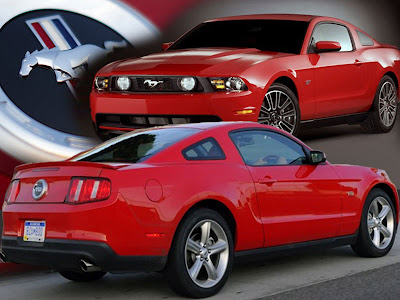
"The best Mustangs have always been the ones that connect young America with the spirit of the times - and the 2010 does exactly that," said J Mays, Ford's group vice president of Design. "The new Ford Mustang is close to the magnetic center of the original, fully loaded with the swagger you'd expect, but with modern refinement and attention to detail like you've never seen in a muscle car."
It starts with the more aggressive grille, punctuated with the first new Mustang emblem since the car's introduction in 1964. Both the V6 and GT have brand-new sculptured front-end designs unique to each model. The headlamps and turn indicators, now integrated into one unit, are modern interpretations inspired by the 1970 Ford Mustang. On the V6, the fog lamps are located on the lower fascia, while on the GT, the fog lamps are again located in the upper grille - but are smaller than the outgoing model, similar to the original lamps of the 1967-68 models that inspired them.
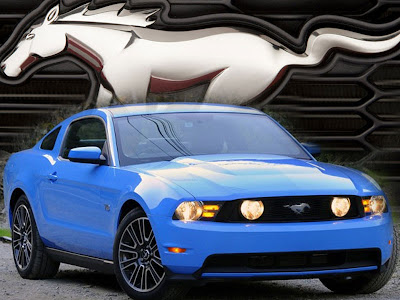
Cleverly combining modern technology with Ford Mustang heritage is a signature of the 2010 model, in terms of both design and engineering. The wheel-and-tire combinations are 1 inch bigger across the board, ranging from 17 to 19 inches, which helps improve handling and braking. The shocks have been retuned on all models as well. The 2010 Ford Mustang 4.6-liter V8 benefits from innovations from the popular Ford Mustang Bullitt model. Power has increased to 315 horsepower. "It runs on regular gasoline, but if you put in premium it has adaptive calibration that will give you even better mid-range torque," Barnes said, adding that Easy Fuel™, Ford's innovative capless fuel system, is standard on all models. "It's an upgrade to the most-robust, most-accessorized engine in the marketplace today," Randle added. "No one has the reliability, no one has the upgraded options. This is a fantastic engine, proven on the race track, the drag strip and on the highway."
AdvanceTrac™ Electronic Stability Control (ESC) is now standard and complements Mustang's all-speed traction control and anti-lock braking system (ABS). In addition to all of the design and driving dynamics improvements, the 2010 Ford Mustang is engineered to maintain its top government safety ratings. Standard safety equipment includes: dual stage front driver and passenger air bags; front seat-mounted side air bags; and, Ford's Personal Safety System.
The powerful new one-piece instrument panel design is crafted in seamless soft-touch TPO (Thermoplastic Olefin) skin fully encompassing available genuine aluminum-finish panels. Mustang's chromed-ringed gauges and dual-vane air register vents are precisely crafted and positioned.
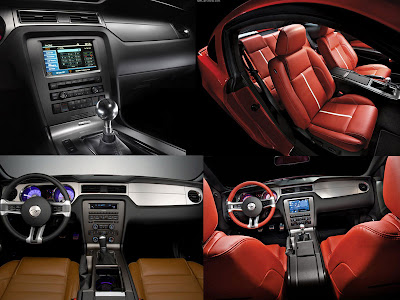
With a completely redone exterior that echoes the classic Mustang designs of the past, an interior featuring world-class materials, numerous technology upgrades and an improved driving experience, the 2010 Ford Mustang is poised to become the latest classic in the proud line of Ford's iconic American muscle car.
From the V6 to the Shelby GT500, the goal was to make each model appear even more sculpted than its predecessor. The result is a lineup of iconic cars that maintain their identity in a contemporary way. Each classic design element - the grille shape, the "hockey stick,' the hop up into the rear haunch, the quarter-glass window, the three-bar tail lamp, the center-mounted gas cap - is modernized in a way that lends the new car even more presence and character. The aggressive look is enhanced by larger grille openings flanked by slimmer headlamps, which now incorporate integrated turn indicators.
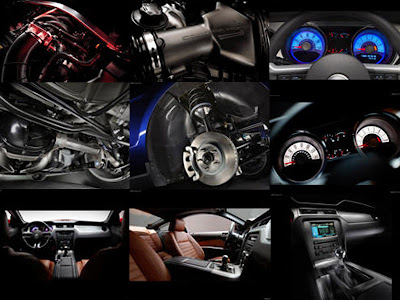
The team further enhanced the agile design by stripping away unnecessary clutter. That included minimizing overhangs, eliminating the rear key-hole cylinder, chamfering the rear corner and simplifying the pedestal spoilers to a more compact design. The antenna, previously on the front fender, is now much shorter and relocated to the rear of the 2010 Ford Mustang. The result is a clean, sporty design that looks smart and efficient.
Another inherited and distinctly identifiable Ford Mustang cue comes in the form of the tri-bar tail lamps. The three individual red chambers, each lit sequentially by a single Luxion LED, are separated by two clear vertical back-up elements, ensuring the tri-bar look is recognized in lit or unlit conditions. The sequential illumination of each chamber is a unique and important characteristic of the 2010 Mustang's identity.
Extensive improvements to the next-generation Ford Mustang, readily apparent on the exterior design and interior content and material upgrades, will be felt in the ride and handling of the 2010 model. Taking a cue from the successful Mustang Bullitt and Ford Racing vehicles, many of those enhancements are carried through the full Ford Mustang lineup.
Tires are increased by an inch across the Ford Mustang line, with 17-inch tires standard on the V6 and 18-inch tires standard on the V8. A 19-inch Pirelli Summer tire is late available as an option for those seeking higher performance. Design and engineering teams spent a lot of time honing the aerodynamics of the 2010 Ford Mustang, ensuring that both the aerodynamic drag and lift balance were improved for better overall efficiency.
Monday, October 25, 2010
Alfa Romeo Sport Cars Autodelta Alfa Romeo 8C Competizione


Editor of Auto Express, David Johns, said: “Choosing the best designed cars of the year is never easy, so we turned to the experts for help – Auto Express readers. Only one car was ever going to win – Alfa Romeo’s Sport Cars 8C Competizione simply blew the opposition away.”

Alfa Romeo Sport Cars Autodelta Alfa Romeo 8C Competizione
Marketing Director of Alfa Romeo UK, Nicholas Bernard, added: “It’s fabulous to know that this supercar has stirred the emotions and unified car fans across the UK. It is the epitome of the Alfa Romeo Sport Cars marque and will provide the design inspiration for future models.”
The 4.7-liter V8 engine in the car masterpiece is obviously a slightly higher performance using a new engine management software. The engine develops 444 hp at its plant stock and Autodelta incarnation promises to 17 more to offer. Technical refinements to the chassis of the car and the suspension was also promised, but no further details were released by the company.

Few details are known at this point, but a remapped ECU should squeeze out a modest 17 horsepower boost from the stock 444-hp, 4.7-liter Ferrari-developed V8. Alfa Romeo Sport Cars Autodelta Alfa Romeo 8C Competizione is also working on fine-tuning the chassis, taking their 8C around some of the finest tracks in Europe to get it just right.

Alfa Romeo Sport Cars Autodelta Alfa Romeo 8C Competizione
Autodelta also announced that they are working on chassis and suspension upgrades that will be presented at a later date.Thursday, October 14, 2010
Pagani Sport Cars Pagani Zonda 750 Hypercar 2010

The Italian hypercar manufacturer Pagani has released the first details and images of the new Pagani Zonda 750 sport cars. Latest model Pagani Zonda 750 sport cars introduces in market with superb quality and enhance features this new model is it’s based on the limited-production Zonda Cinque, but is added eminent by its exceptional purple paint format and a specially-designed back window to accommodate the huge above your head air intake. At the exterior you can notice the special body finish, plus a series of customized elements. The hypercar follows the Zonda Uno and Zonda HH, both two brand new one-off models.

Pagani Sport Cars Pagani Zonda 750 Hypercar 2010
The first is the latest and one of David Heinemeier Hansson Meier, a software mogul. The vehicle, which turned the scales at 1210 kilograms (2667 pounds). This fantastic model has amazing shape, design sport cars and super purple color which seems quite excellent the cars conjectures circulating is that the Pagani Sport Cars Pagani Zonda 750 Hypercar 2010 means the horsepower figure on the Mercedes AMG-built 7.3-liter V12, which would surely push the Zonda’s already artless concert into the next dimension. 
Pagani Sport Cars - Pagani Zonda 750 Hypercar 2010 is powered by a 7.3 liter V12 engine developed by AMG, outputs 678 hp and 780 Nm of torque. The Zonda 750 will probably get from 0 to 100 km/h in 3.4 seconds, the top speed is 350 km/h.

This is a new generation of fantastic sport cars model it has excellent speed capacity you can easily drive fastest anywhere. In market there are lots of sport cars model are available but this one is new and has enhance capacity to other model we are really impressed with this new sport cars model which comes in excellence performance it comes with superior wheels and strong body it is just for two people there is details are not given about its releasing or pricing yet but we hope that it will be soon comes in market!

Pagani Sport Cars Pagani Zonda 750 Hypercar 2010
Sunday, October 10, 2010
2010 Jaguar Sport Cars Jaguar C-X75 EREV Electric Supercars Concept

At the 2010 Paris Auto Show, the Jaguar C-X75 Concept Car has finally been revealed after months of tantalizing tidbits from Jaguar designers and executives. The surprise is, this supercar is powered by an innovative powertrain that combines hub-mounted electric motors and twin micro gas turbines. The Jaguar C-X75 is described by company executives as a “range-extended electric two-seater supercar.”

The C-X75 concept cars is both a celebration of 75 years of iconic Jaguar design and a look into the future of automotive technology. “Performance through innovation has always been a Jaguar hallmark. From the beginning, cars such as the C-Type and D-Type pioneered aluminum construction, aerodynamic design, racing monocoques and disc brakes. The C-X75 demonstrates that the company is still leading the field in automotive design and technology.” Dr Ralf Speth, Chief Executive Officer, Jaguar Land Rover.

The 2010 Jaguar Sport Cars Jaguar C-X75 EREV Electric Supercars Concept is shorter, slimmer and lower than most supercars, and the Jaguar designers have made the concept car’s aerodynamics as efficient as possible to enhance performance, notably the exhaust-blown underbody aero diffuser. Matt Beavan, the car’s principal designer, also says, “We wanted to emphasize how the air makes its way not just over the car but is also channeled into the rear air box. When operating at 80,000 rpm, each gas turbine requires 25,000 liters of air per minute, which means we need a series of carefully honed intakes.”

2010 Jaguar Sport Cars Jaguar C-X75 EREV Electric Supercars Concept
The C-X75’s 580kW (778bhp) propulsion system combines powerful 145kW (195bhp) electric motors at each wheel for outstanding performance. At the center of the car sit state-of-the-art, mid-mounted micro gas-turbines. These can either generate 140kW (188bhp) to charge the batteries and extend the range of the car to a remarkable 900km (560 miles) – enough to drive from London to Berlin on a single tank – or when in Track mode provide supplementary power directly to the electric motors. The four electric motors provide torque-vectored, all-wheel drive traction and grip, essential in a car that produces 580kW (778bhp) and 1600Nm (1180lb ft) of torque.
The plug-in, electric drive supercar has an all-electric range of 110 km (68 miles) plus a potential top speed of 330 km/h (205 mph), acceleration from 0-100 km/h (62 mph) in 3.4 seconds, and 80-145 km/h (50-90 mph) in 2.3 seconds. Active aerodynamics allow for a simple fuselage section that remains stable at very high speeds. The plug-in will produce 28 grams of CO2 per kilometer on the EU test cycle, according to Jaguar.

2010 Jaguar Sport Cars Jaguar C-X75 EREV Electric Supercars Concept
--##**# Jaguar Cars #**##--From its beginning as a manufacturer of motorcycle sidecars in 1922, Jaguar Cars has grown to become one of the world’s premier manufacturers of luxury sedans and sports cars and with that, one of the most recognized commercial brands. The company’s vision is simple: To produce beautiful fast cars that are desired the world over. The company operates two manufacturing plants in the United Kingdom and is fully engaged in environmental programs, community work and brand awareness exercises such as motorsports.
Friday, October 8, 2010
2010 Venturi Sport Cars Venturi America Electric Sport Cars

French automaker Venturi unveiled a new concept cars at the 2010 Paris Motor Show known as the Venturi America. The dune-buggy inspired pays a tribute to traditional America while incorporating some ecological awareness. This new American dream is embodied by this new model from VENTURI : a high-riding electric sports car that one can see oneself driving, one’s hair in the wind, through the fantastic scenery offered by this vast continent.

Monaco-based Venturi Automobiles, builders of the original $400,000 Fetish all-electric sports car, and a series of innovative zero-emission vehicles since, are displaying its newest showcase electric car, the Venturi AMERICA.

A real synthesis of two exclusive automobile worlds, the AMERICA is both an electric sports car and an all-terrain leisure vehicle. This “mix” approach ensures extreme versatility in use. Its performance, balance and sports car road-holding, combined with its particularly high body and specific tyre mounting, ensure that it is equally at ease on steep paths as on the highway. This electric “Buggy” offers the possibility of venturing off the beaten track while respecting the environment in terms of both noise pollution and greenhouse gas emissions.

2010 Venturi Sport Cars Venturi America Electric Sport Cars
Equipped with the same motor of over 300 hp as the VENTURI FÉTISH, this new-era “buggy” is, in fact, a high-powered lightweight vehicle with a chassis specially designed to suit its particularly high body. The AMERICA is nevertheless an acceleration car that symbolizes “cool green attitude” while being a luxury technological product.
The 2010 Venturi Sport Cars Venturi America Electric Sport Cars is an electric power driven one and the engine is same as that fitted on the Venturi Fetish. The power that we get is 300 hp or 220 kw and more along with 380 Nm of torque. The battery pack that is installed on the car is a 54 KwHr rated one and has LIV-10 Lithium ion Polymer cells.

The battery management system has been designed by Ventec who are the leading people in this field, which provides a range of up to 300 km at a stabilized speed of 90 km/h (190 miles at 56 mph stabilized). It can recharge using a standard electrical socket in 8 hours or at fast charge terminals in 3 hours.
 2010 Venturi Sport Cars Venturi America Electric Sport Cars
2010 Venturi Sport Cars Venturi America Electric Sport Cars
Subscribe to:
Posts (Atom)
LinkWithin
